

Friction Tyres
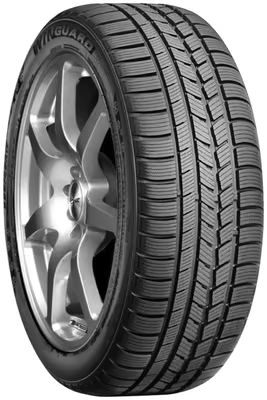
Friction tyres are non-studded winter tyres that grip through a soft rubber compound and a dense pattern of sipes. They are quieter than studded tyres and work well in town and on regularly maintained roads. In Estonia, non-studded winter tyres must carry the 3PMSF symbol during the mandatory winter tyre period.
7735 matching results


 M+S
M+S
 M+S
M+S
M+S
M+S
M+S
M+S
 M+S
M+S
M+S
M+S
M+S
M+S
M+S
M+S
M+S
M+S
 M+S
M+S
 M+S
M+S
 M+S
M+S
M+S
M+S
M+S
M+S
M+S
M+S
 M+S
M+S
M+S
M+S
 M+S
M+S
M+S
M+S
 M+S
M+S
M+S
M+S
M+S
M+S
M+S
M+S
M+S
M+S
24 from 7735 products displayed
How a friction tyre works
A friction tyre holds the road without studs: a compound that stays flexible in the cold and numerous fine slits in the tread – sipes – create many edges that claw into snow and icy surfaces. This works best on snow and ice in freezing weather; on wet, melting ice every non-studded tyre loses much of its grip. This category also includes studdable tyres sold without studs; they are used like ordinary non-studded winter tyres, and the 3PMSF requirement applies to them as well.
Nordic and Central European winter tyres
Nordic friction tyres are designed for cold winters, snow and ice: the compound is softer and there are more sipes. They often carry the ice grip symbol on the EU tyre label, showing that the tyre has passed an ice test.
Central European winter tyres are made for milder winters with wet and slushy roads: the compound is firmer and the tyre performs better on wet asphalt and at higher speeds, but its grip on ice is weaker. They usually do not have the ice grip symbol.
For Estonian winters, where ice and snow are common, we recommend a Nordic tyre. Bear in mind that tyres with the ice grip symbol are usually weaker on wet roads – the wet grip class on the label shows this too.
Rules that apply to friction tyres
From 1 December to 1 March a friction tyre must carry both the M+S marking and the three-peak mountain snowflake symbol (3PMSF) and have a tread depth of at least 3.0 mm. The ice grip symbol is not mandatory. Friction and studded tyres cannot be mixed on a car, because studded tyres must be fitted on all wheels. Read more in our article on the 3PMSF marking.
Who friction tyres suit
A friction tyre is a good fit if you drive mainly in town and on regularly maintained roads, value a quiet ride or often drive on bare asphalt. Unlike studded tyres, friction tyres are not limited to a set period, which gives you more flexibility when choosing the time to change tyres in spring. If you often drive on icy highways or unmaintained side roads, choose studded tyres.