

Summer Tyres
Summer tyres are built for the warm season: a harder compound and wide grooves give precise handling and short braking distances on dry and wet asphalt. When choosing, check the wet grip and noise ratings on the EU label and make sure the size, load index and speed index suit your vehicle. Read the guide
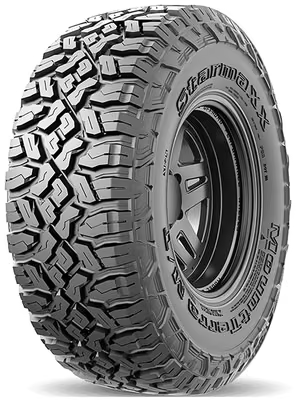


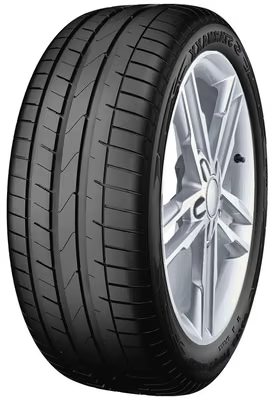
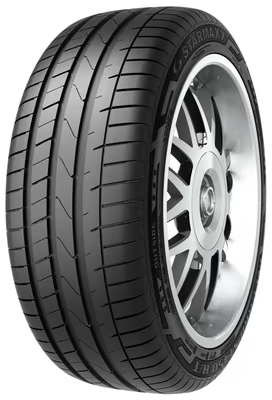
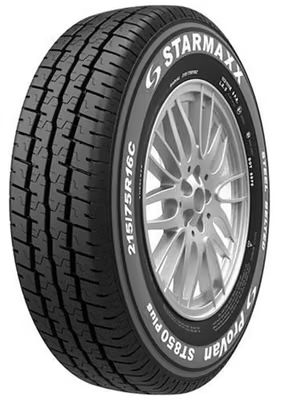

When to switch to summer tyres
In Estonia, winter tyres are mandatory from 1 December to 1 March, and studded tyres may be used from 15 October to 31 March, or from 1 October to 30 April if wintry road and weather conditions occur. There is no fixed date for fitting summer tyres: what matters is that the mandatory winter tyre period is over and that studded tyres are not used beyond their permitted period.
Our recommendation: fit summer tyres once the average daily temperature stays above +7 °C and night frosts are over – in Estonia usually in April or May. See our guide to seasonal tyre changes.
What to look for in a summer tyre
- Wet grip – class A–E on the EU label; a better-rated tyre stops in a shorter distance in the rain.
- Speed index – choose at least the index the vehicle manufacturer specifies; this matters most at highway speeds and on long trips.
- Noise – the label shows external rolling noise in decibels and as class A–C.
- Load – if you carry heavy loads, tow a trailer or drive an SUV, choose a tyre with a sufficient load index (XL for cars, C for vans); see our article on load index.
- Fuel efficiency – lower rolling resistance cuts fuel or electricity consumption.
Wet grip and fuel efficiency ratings can pull in opposite directions. If you often drive on highways and in the rain, the wet grip class usually matters more.
Tread depth: legal minimum and recommendation
Legal requirement: car and van tyres must have a remaining tread depth of at least 1.6 mm.
Recommendation: replace summer tyres when about 3 mm of tread is left. A worn tyre clears water less effectively, so the risk of aquaplaning and the braking distance on wet roads increase noticeably.
When all-season tyres make sense
If you drive little, mostly in town and on maintained roads, all-season tyres may be an option. Keep in mind that during the mandatory winter tyre period in Estonia, only all-season tyres that carry the three-peak mountain snowflake symbol (3PMSF) in addition to M+S are allowed. In summer their handling and braking do not match those of dedicated summer tyres, especially on hot asphalt.