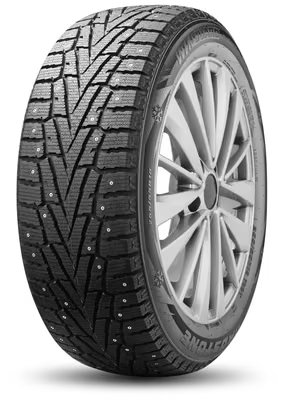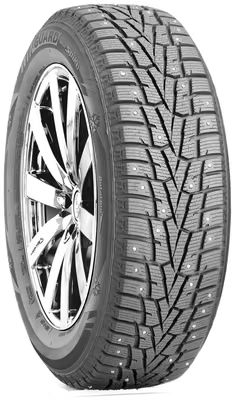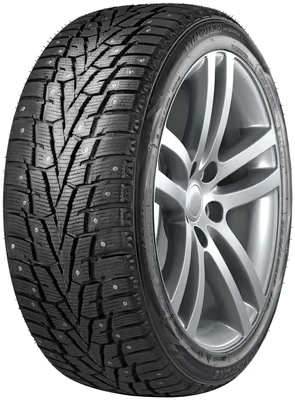

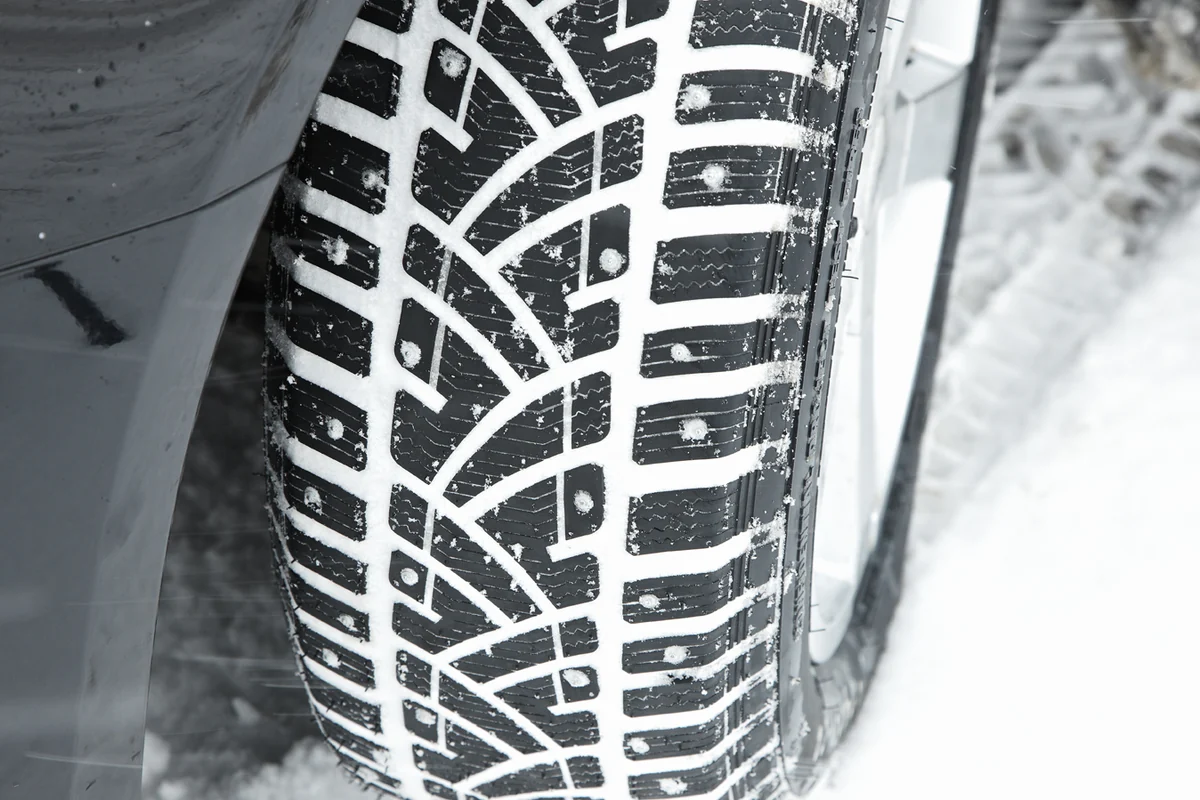
What are studded tyres?
A studded tyre is a winter tyre with metal studs anchored in its tread. The studs bite mechanically into ice, while the rubber compound, sipes and tread blocks work on snow, slush and asphalt.
Studs are not a universal “best winter tyre” badge. They are most valuable when a regular route includes bare or polished ice, frozen junctions, lightly maintained roads and repeated thaw-and-freeze cycles. For a driver who mostly uses cleared city roads, a high-quality Nordic studless tyre may be the quieter and more sensible choice.
What does the research actually show?
In controlled VTI testing, the clearest advantage from studs appears on smooth or polished ice. There is no single honest figure such as “X per cent safer”. Test results vary with temperature, ice texture, tyre model and condition, stud protrusion and pressure. Real-world traffic safety additionally depends on speed, road maintenance, driver behaviour and the vehicle’s assistance systems.
| Road condition | Studded tyres | Studless winter tyres |
|---|---|---|
| Bare or polished ice | The studs’ mechanical grip usually gives the clearest advantage in braking and steering. | Grip comes from the soft compound and sipes; results vary greatly between models. |
| Packed snow | Studs alone do not provide a decisive advantage; tread pattern, blocks and sipes are important. | Nordic studless tyres performed slightly better on average in the VTI test; this result cannot be extended to loose or deep snow. |
| Wet or dry asphalt | There is no automatic advantage; studs add noise and grip depends on the complete tyre design. | Often quieter on a cleared road, but the individual model still matters. |
Choose for the most difficult conditions you meet regularly, not the average day. VTI’s research overview likewise highlights substantial differences between tyre types, models and their condition: VTI winter tyre research.
Studded-tyre rules in Estonia
Important: Estonia has a normal studded-tyre window that extends when winter road and weather conditions actually occur.
- Studded tyres may normally be used from 15 October through 31 March. In winter road and weather conditions they are permitted from 1 October through 30 April; the driver assesses the conditions.
- Winter tyres are compulsory from 1 December through 1 March for M1, N1 and O2 vehicles and enclosed L6e and L7e vehicles.
- For those vehicles, the legal minimum winter tread depth is 3 mm. Estonia’s Transport Administration recommends considering replacement at 4 mm.
- Since 1 December 2022, studless winter tyres on M1, N1, O2 and enclosed L6e and L7e vehicles must carry 3PMSF in addition to M+S. UNECE Regulation No 54 POR off-road tyres are exempt; the requirement should not be applied automatically to studded tyres.
- When studs are used on an M1, N1, O1, O2, L-category or special-purpose vehicle, every wheel must be fitted with a studded tyre. If a car towing an O2 trailer has studs, the trailer must also have studded tyres.
Rules can change, and a journey through several countries must meet each country’s requirements. Check the official source again and observe local road signs before setting off.
When should winter tyres be fitted?
For the full seasonal calendar, tread limits and a practical fitting plan, read When to change tyres in Estonia.
+7 °C is neither a legal nor a universal technical threshold. Plan the change around forecast winter conditions, your usual travel times and the period that applies in the country.
Studs, 3PMSF and other markings
In Estonia, studless winter tyres on M1, N1, O2 and enclosed L6e and L7e vehicles must carry 3PMSF in addition to M+S; UNECE Regulation No 54 POR off-road tyres are exempt. Studs are a separate construction feature, so check the complete product specification.
The markings hub includes the studs card and explanations of 3PMSF, M+S, ice grip, DOT and other codes: tyre markings guide.
“Studded” is not the same as “studdable”
These two words look similar in a catalogue, but they describe different products.
| Term | What you receive |
|---|---|
| Studded | The tyre has been factory- or professionally studded and is sold with the studs installed. |
| Studdable | The tread has prepared stud holes, but the tyre is normally sold without studs. Always verify the exact specification in the product description. |
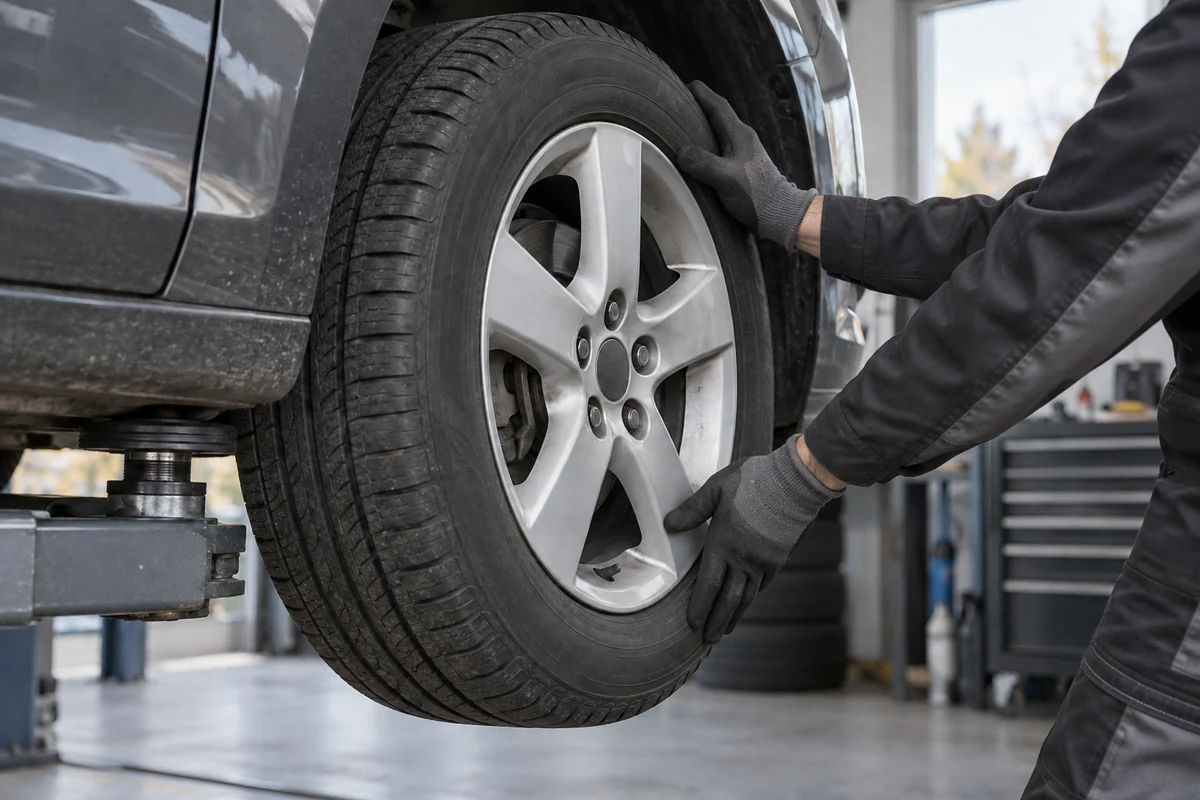
Fitting: a specialist must select and install studs to the requirements of the particular tyre manufacturer. Drilling a tread yourself can damage the tyre, while unsuitable or unevenly installed studs upset balance and are quickly lost.
Checks before and during the season
Even the right tyre type will not help if the set is worn or used incorrectly. Before fitting and regularly throughout winter, check:
- The complete set: use four winter tyres of the same type. Do not mix studded and studless tyres between axles; several countries prohibit this expressly.
- Tread and studs: measure depth at several points, look for uneven wear and check that studs are not missing across large areas.
- Pressure: measure cold tyres against the vehicle maker’s placard. Pressure naturally falls as the weather gets colder.
- Age and damage: inspect the DOT date, cracks, bulges, cuts and the condition of previous repairs.
- Gentle bedding-in: avoid hard acceleration and braking during the first few hundred kilometres with a new set and follow the tyre maker’s instructions.
The grip, noise and environmental trade-off
Studded tyres can provide an important reserve on roads that ice frequently, but they normally produce more rolling noise on clear asphalt. Studs also abrade the road surface more heavily and contribute to road-wear particles, especially PM10.
That does not make studs the wrong choice in every case. Match the decision to the real route: if ice is a frequent and severe risk, their benefit may justify the compromise; if almost all journeys are on cleared roads, compare Nordic studless tyres. On measuring road wear caused by studs: peer-reviewed Swedish study of a studded-tyre pavement-wear model.
Frequently asked questions
Do studded tyres always stop in a shorter distance?
No. Their clearest advantage is on smooth ice. On snow, wet asphalt or dry asphalt, the individual model, temperature, wear and road surface determine the outcome.
Are studs needed only on the driven axle?
No. Unequal grip between axles can make a vehicle unstable under braking or in a bend, and several countries prohibit mixing the two types. Use a consistent set of four tyres.
Does 3PMSF mean that a tyre is studded?
No. 3PMSF means that the tyre reached the specified minimum snow-grip level in a standardised test; studs are a separate construction feature. Check both in the product specification.
Can studded tyres be used in every European country?
No. Rules vary substantially and some countries prohibit studs. Check every transit country, not only the destination.
Sources
Legal dates and technical conclusions were checked against official authorities and VTI sources: