

Winter Tyres
Winter tyres stay flexible in the cold and grip on snow, slush and ice. In Estonia they are mandatory for passenger cars and light vans from 1 December to 1 March, and non-studded winter tyres must carry the 3PMSF symbol. Choose between studded and friction tyres based on how often you drive on icy and unmaintained roads. Read the guide


 M+S
M+S
 M+S
M+S
M+S
M+S
M+S
M+S
 M+S
M+S
M+S
M+S
M+S
M+S
M+S
M+S
M+S
M+S
 M+S
M+S
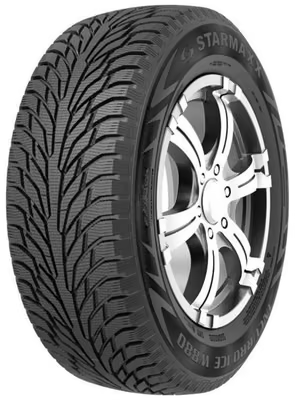 M+S
M+S
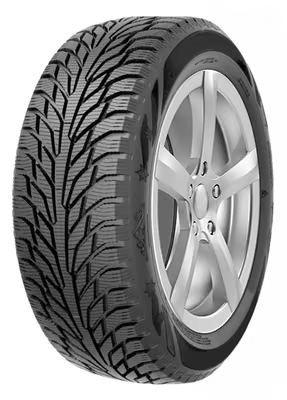 M+S
M+S
M+S
M+S
M+S
M+S
M+S
M+S
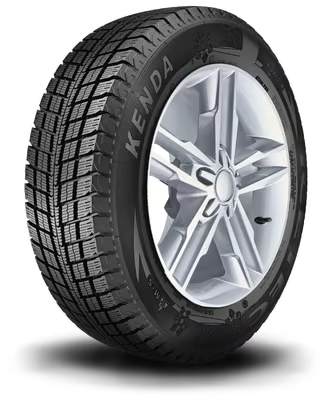
 M+S
M+S
M+S
M+S
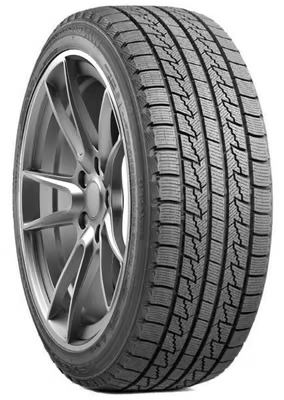
 M+S
M+S
M+S
M+S
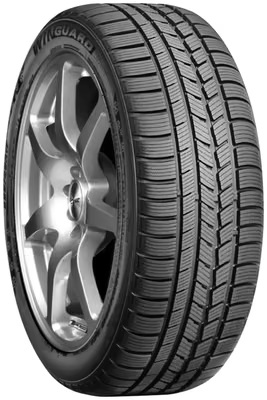 M+S
M+S
M+S
M+S
M+S
M+S
M+S
M+S
M+S
M+S
Winter tyre rules in Estonia
- Winter tyres are mandatory from 1 December to 1 March for passenger cars (M1), light commercial vehicles (N1), O2 trailers and L6e/L7e vehicles with a body.
- Winter tyres must be marked M+S. Since 1 December 2022, non-studded winter tyres must also carry the three-peak mountain snowflake symbol (3PMSF) – the M+S marking alone is no longer enough.
- During the mandatory period the tread depth of winter tyres must be at least 3.0 mm; at other times at least 1.6 mm.
- Tyres with different tread types must not be fitted on the same axle.
These rules are set out in Annex 1 to Regulation No. 42 of the Minister of Economic Affairs and Communications on technical requirements for motor vehicles and their trailers (in Estonian).
Our recommendation: a winter tyre loses grip well before it reaches the legal minimum, so replace it when about 4 mm of tread is left.
Studded or friction tyres
Choose studded tyres if you often meet black ice or roads that have not yet been treated and want the shortest possible braking distance on ice. Choose friction tyres if you drive mostly in town on bare asphalt and value a quiet ride. Permitted periods and other rules for studs are in our article on studded tyres.
3PMSF and the ice grip symbol
The three-peak mountain snowflake symbol (3PMSF) shows that the tyre has passed a standardised snow test under UN Regulation No. 117. The ice grip symbol on the EU tyre label shows that the tyre has also passed an ice test; it is not mandatory. The difference between Nordic and Central European winter tyres is explained on the friction tyres page. Read more in our article on the 3PMSF marking.
When to fit winter tyres
Winter tyres are required from 1 December, but we recommend fitting them earlier – when the average daily temperature falls below +7 °C or the first snow and night frosts are forecast; in Estonia this is usually in October or early November. Studded tyres may be fitted from 15 October, or from 1 October in wintry conditions. See also our guide to seasonal tyre changes.